Underbiking at its finest: First Impressions of Cane Creeks Invert Fork
My name is Karlos. I live for long rides, rough roads, and epic journeys. For 20-plus years, I completed these adventures on my fully rigid mountain bike. Fast forward to about 2 years ago, and I decided to give gravel bikes a try. I found out it’s fun, fast, and exhilarating. What I like most is underbiking, taking my gravel bike places others would not consider or dream of.
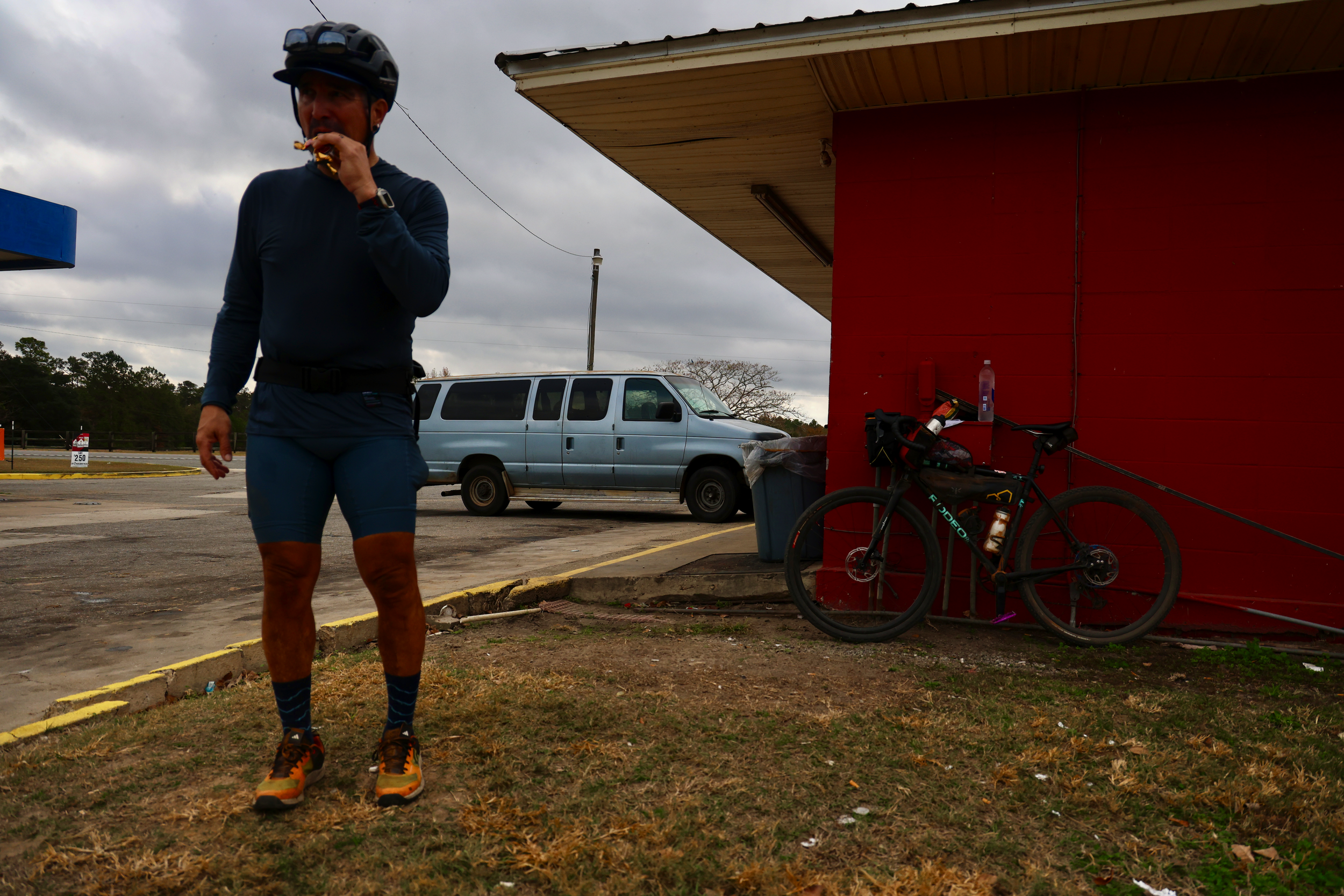
Eat, Ride, thats about what you do when you ride 190 miles in shot
Fast forward to a few weeks ago, when I was offered the opportunity to test out the Cane Creek Invert Suspension fork, specifically designed for gravel bikes. Being a person who enjoys a fully rigid bike, I have recently rediscovered the advantages of having some suspension to smooth out the rough trails and have spent a bit of time playing with suspension forks and seat posts.
The opportunity to try a suspension fork on my bike was appealing. I got it just in time to install it right before my 190-mile ride in Middle Southern Georgia. One thing that I find intimidating about suspension forks is all the knobs and air chambers, and adjustments. I just got a new mountain bike to test, and it has a suspension fork, and I get overwhelmed by the setup and find myself constantly locking it out. So the simplicity of this Invert fork was the first thing I found attractive. Add 95% of the rider/gear weight and go.
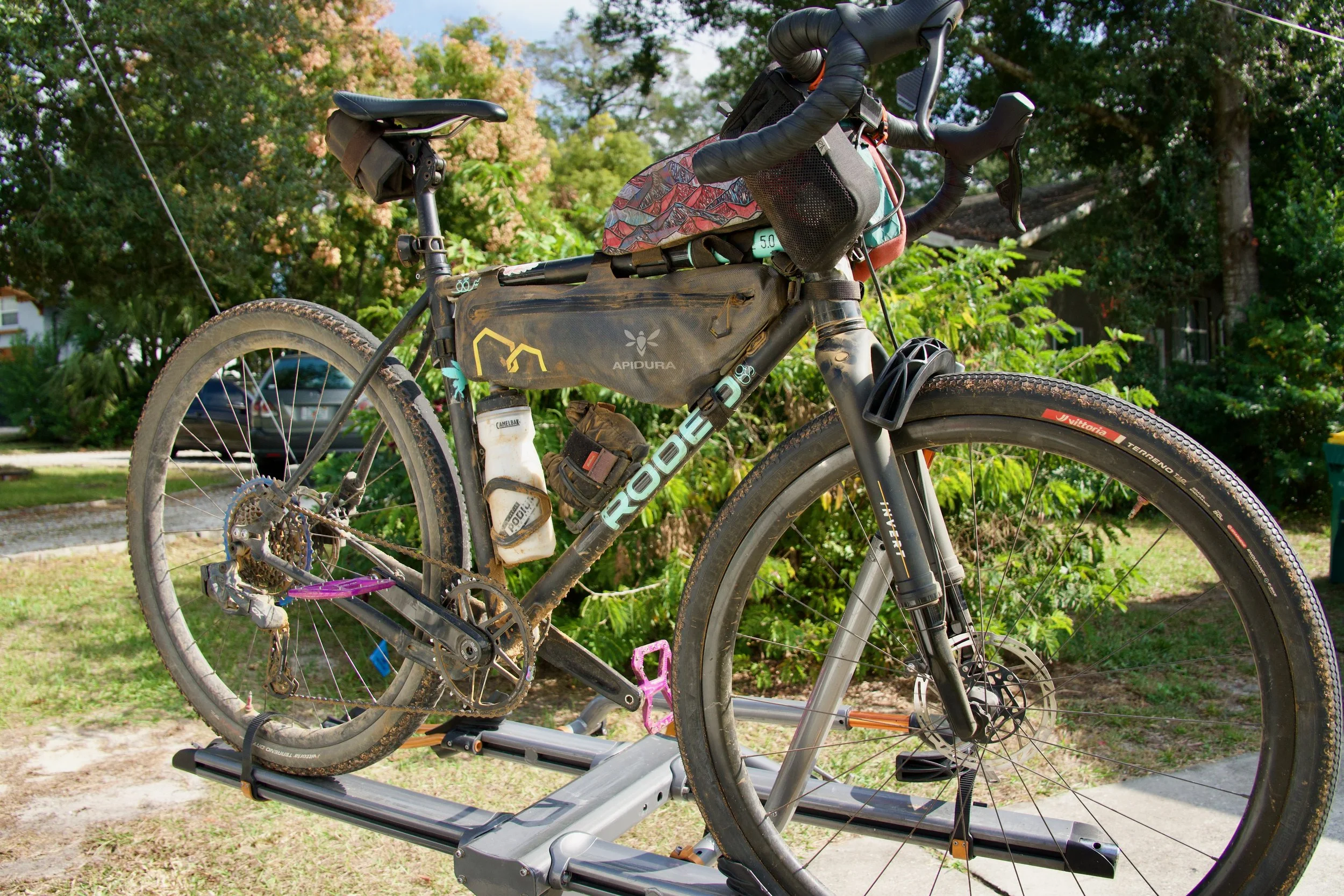
This is an after shot, even though the downhills were fast and some of the ruts were deep I never cycled through the entire travel of the fork.
Took just a little time to install it, but once on, I did a small test spin around the neighborhood, and what I immediately struck me was how natural it felt. I didn’t immediately notice any huge difference that would intimidate me from trying a new piece of kit for an event, which anyone who does big challenges knows is a huge no-no.
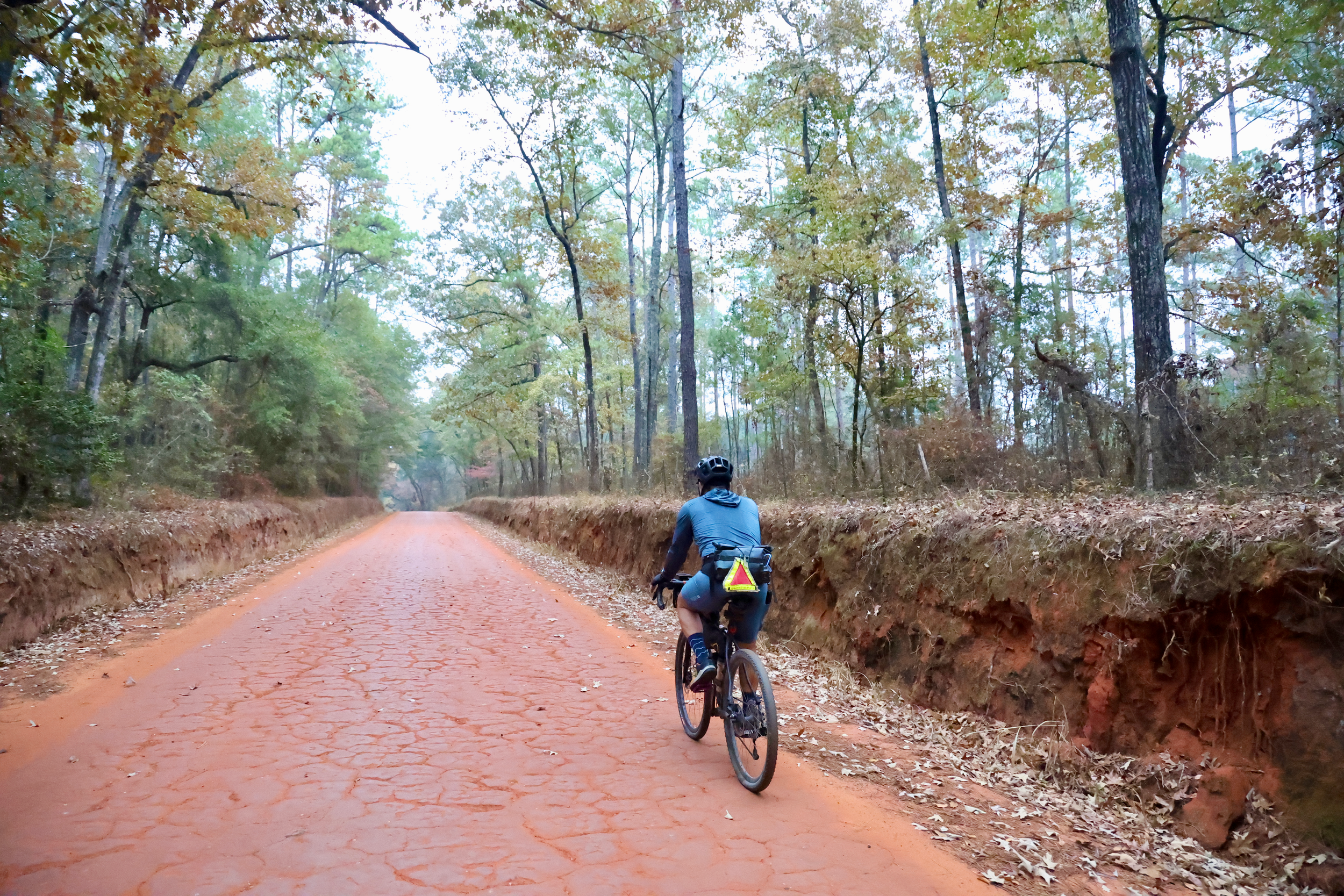
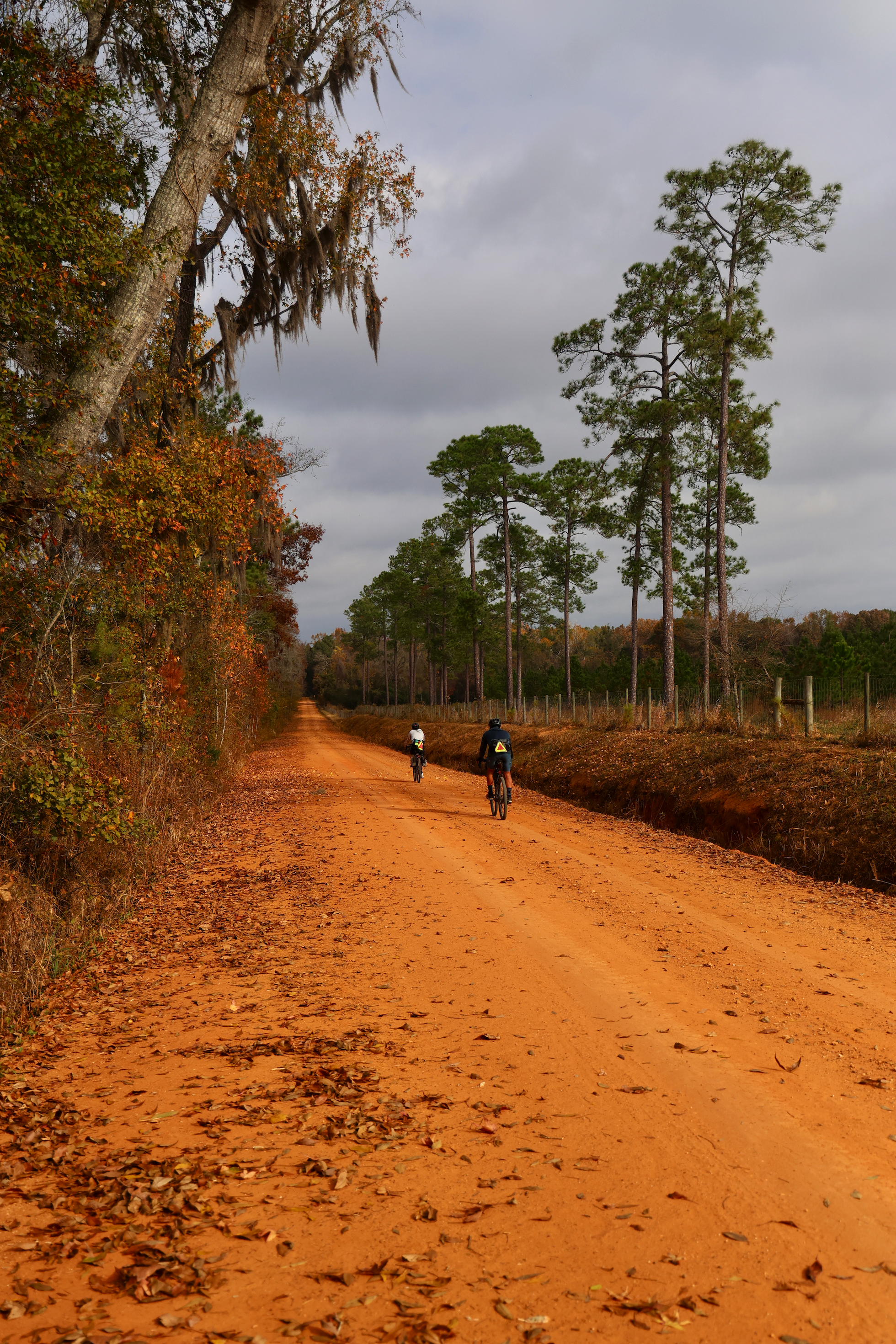
Beautiful morning riding south from Thomasville, GA.
It is 6:54 a.m., and we start. The entire ride was seamless. The telltale sign of a good piece of equipment is that it works and you don’t think about it. And for 190 miles, I just rode as hard and as fast as I could, and not once did I say to myself, “Oh, this fork is being weird, or this is not working right.” I was even filming at one point, hit a huge hole, and didn’t crash, a true testament to how well the fork performed on my first ride. Handling was crisp, sharp, and accurate, and when done, I had no sore palms or shoulders, something I am pretty used to having after a long, hard push. I even got back on the bike on Monday as if the 190-mile weekend didn’t even happen.
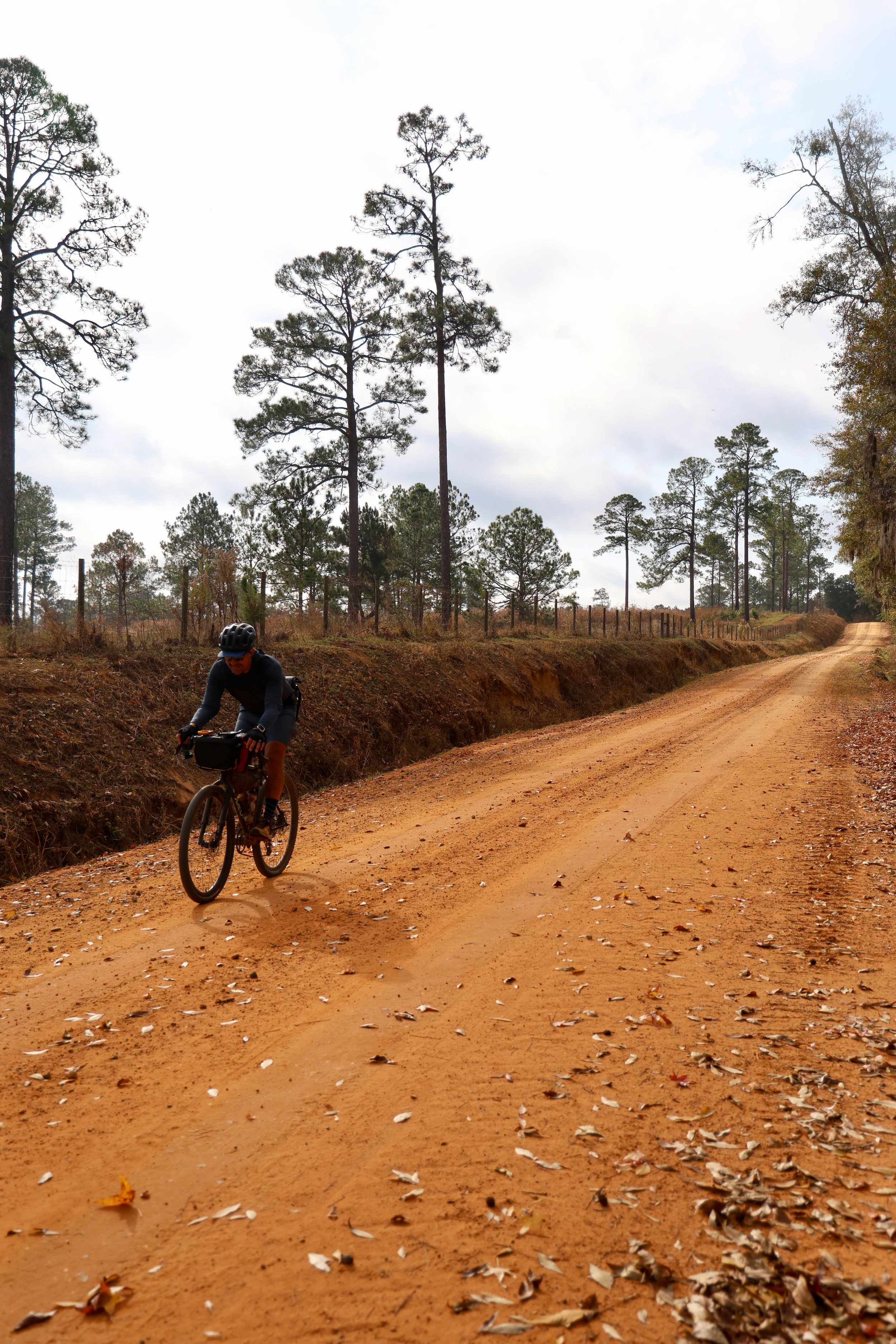
Lots of Fast Downhills, we dont get to coast alot in Florida, so all these fast descents were a real treat.
IN short, based on my first impressions, I look forward to more testing on this fork and even longer rides with hopes of testing the limits of what it’s capable of. To recap, my setup consisted of measuring my old fork from axle to top of bar, installing the new fork to match the height, and then doing the math to add 95% of the weight of myself and my equipment. The rest was just carefree, riding with significantly less stress on my hands and upper body after a 19-hour PUSH.